Showing posts with label new year. Show all posts

Sunday, January 06, 2008

Where Did 2007 Take You?

From top to bottom, left to right: Matsumoto Castle (Nagano), geiko in Kamishichiken (Kyoto), the Imperial Palace (Kyoto), Kiyomizudera (Kyoto), Oi Kindergarten (Ena), Kurama fire festival (Kyoto), maiko in Gion (Kyoto), Angkor Wat (Cambodia), maiko (Kyoto).

1. Angkor Wat, Cambodia :
I watched the sun rise over Angkor Wat as it dawned on the year 2007, then spent its first few days playing with my old friends at Ta Prom. I never blogged about it, but I will!

2. Phnom Penh, Cambodia

3. Battambang, Cambodia:
Went on a tuk-tuk tour with my old friends, the monks, wandered the rice fields, took a ride on the bamboo express and spent some quality time with my Cambodian family.

4. Taipei, Taiwan:
Spent a wonderful night curled up on an airport coffee shop couch shaking after drinking my first cup of real coffee EVER. What does Taiwain have against Chai tea?!

5. Nagoya, Aichi, Japan:
An oasis of Chai in a veritable dessert of delicious, non-coffee drinks!

6. Ena, Gifu, Japan:
Emraced by rolling mountains and chock full of rice fields, the lovely little city I was blessed to call home: Winter, Spring, Summer, and Autumn

7. Matsumoto, Nagano, Japan:
Castle-bound, a lovely little roadtrip gone right!

8. Nagano, Japan:
Lovely little roadtrip gone wrong- but what a great adventure!

9. Kyoto, Japan:
Geisha, festivals, temples, palaces. My happy place- a home away from home... away from home.

10. Tokyo, Japan:
Adentures with the Howell Kyodai.

11. Osaka, Japan
Reuniting with my Gaidai friends is always fun!

12. Nara,Japan:
A suprise trip to the ancient captial, ablaze with the colors of fall, to view the Shoso-In Exhibition of National Treasures. Icredible!

13. Inuyama, Aichi, Japan:
Japan's oldest castle: another great desitination for a roadtrip.

14. Cleveland, Ohio, USA

15. Omaha, Nebraska, USA

16. Duluth, Minnesota, USA


Where did the year take you?

Share your list in the comments section!

Tuesday, January 01, 2008

Nengajo: Japanese New Year's Cards

Photobucket
A brilliant up and coming graphic designer in Tokyo, Yuki Nakano designed this nengajo to welcome 2008: The Year of the Rat. The design of most nengajo includes the junishi, or Oriental zodiac animal, of the New Year.

Oshogatsu, or New Year's, is a very special time in Japan—a time for people return to their ancestral homes, spend time with their families and get in touch with their roots. Perhaps the most honored and celebrated of the Japanese holidays, Oshogatsu is a three-day event beginning with Omisoka (New Year's Eve) and lasting through the first three days of the year. Many people wear traditional clothing, like kimono, and play traditional games, such as uta garuta. Preparations begin long in advance as people clean their homes from top to bottom (known as Osouji), prepare Osechi ryori (traditional New Year's food eaten during the forst three days of the new year), and write nengajo, or New Year's greetings.


These days, many people use designs including photos of themselves or their families on their nengajo.

Much like the Christmas cards exchanged in the US and abroad, nengajo are an important part of Japan's New Year's festivities. Now an established tradition, the exchange of these New Year's greetings began in 1873, when postcards were first introduced to Japan. Today, the average family sends over a hundred nengajo to family, friends and colleagues, and businesses mail them to all their customers.


New Year's is a time for wafuku (traditional Japanese clothing) and Osechi ryori, traditional Japanese New Year's food.

Like many Japanese traditions, there is a specific nengajo etiquette code that has no equal in Western culture. While Christmas cards arrive anytime from Thanksgiving to New Year's, nengajo are expected to be delivered on January 1st, not a day before or after. Domestic mail usually only takes a day or two to be delivered, but nengajo can be posted early in special temporary mail boxes to ensure they arrive on time. Every card put into these boxes between December 15th and December 25th gets a special postmark and is delivered promptly on New Year' Day. Waiting for your bundle of postal love (they literally arrive bound together) and reading the flood of New Year’s wishes on January 1st is a cherished holiday tradition, similar to waiting for presents and opening them on Christmas.

Photobucket

When a surprise nengajo arrives from someone you have forgotten, it is always acceptable to send your greetings on January 6, reminding them to take care in the cold weather (寒中お見舞いもしあげます: kanchu omimai moshiagemasu). If someone you know has recently lost a loved one, you should not send a nengajo in observance of the family's mourning.

Of course, if you are a card-carrying gaijin, you are theoretically exempt from all of these rules. Why not surprise your friends and colleagues with your astounding nengajo knowledge and skill? The same gracious people that praise your ability to use chopsticks and poor attempts at speaking Japanese will be thrilled with the thoughtful consideration and effort, regardless of when your nengajo arrives.
Photobucket
Hand drawn by one of my students, this was the first nengajo I recieved in Japan.

Photobucket
Happy New Year, everyone! ☆明けましておめでとう☆

Tuesday, January 18, 2005

Happy New Year Kansai!

Well my first weekend back in Japan turned out to be quite an adventure!


Wakausa Yama Yaki, Nara. Posted by Hello

I happened to come across an amazing photo of Wakakusa Yama Yaki (The Burning of Young Grass Mountain). The stark black silhouette of a 5 storied pagoda seemed to spread its wings and rise from the sea of fire engulfing the gentle slope of the mountain behind it. Fire flowers (the actual translation of the Japanese word for fireworks), shot up from the waves of flame, blooming like cherry blossoms in the dark veil of the night sky.

Luckly along with the picture was a note saying that the festival, which commemorated a battle between Buddhist monks of two rival temples who had set the mountain on fire, was celebrated January 15th of every year! Happy birthday to me!

The next day I was on my way, riding in the lap of the luxurious Shinkansen, Japan’s ultra-fast bullet train. But by the time I got to Nara the sunny blue skies of Ena had faded to paler shade of grey, draped in heavy rain clouds that soaked the earth beneath. There was as much chance of the mountain burning as there was of me spontaneously combusting, so needless to say, I was hopeful.


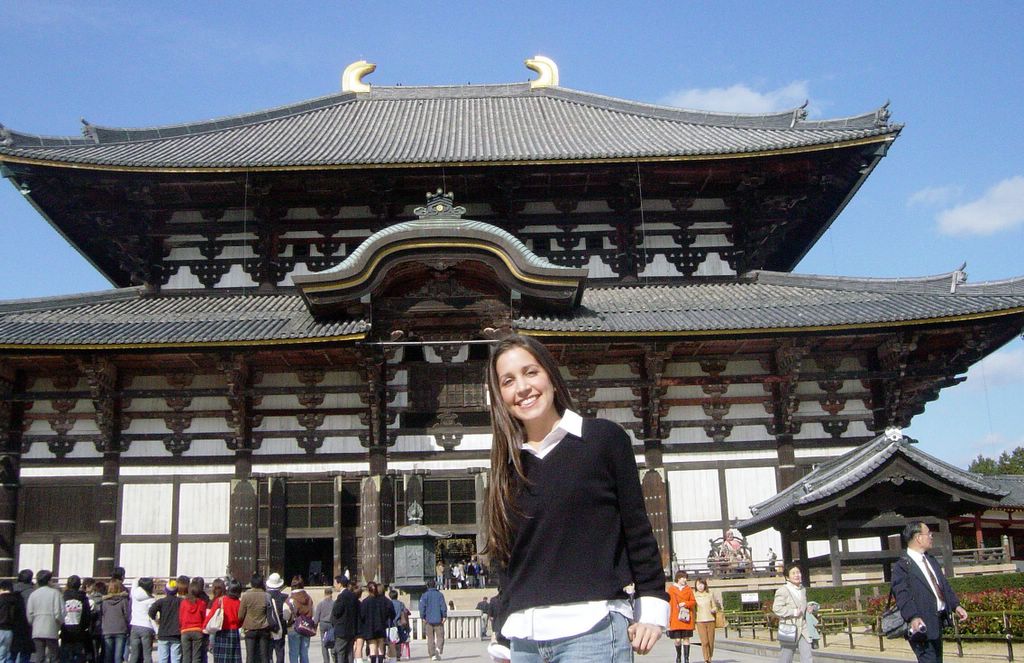
Todaiji, the largest wooden structure on earth, is only a shadow of its former self, 30% the width of the original structure. Fall 2002. Posted by Hello

As I walked toward Todaiji (The Great Eastern Temple), home of the world’s largest cast iron Buddha, I was inevitably stopped by a young rickshaw driver. She casually informed me that this year the festival had been held on January 9th. Ah well. It’s a little early to be celebrating my birthday anyway, so I wasn’t too disappointed. I went to hang out with Buddha for a bit, and figured since I was in Kansai, things could only get better! That’s just the way it works!


Daibutsusan, the Great Buddha of Nara. Posted by Hello

I called Lindz and went to meet her for dinner in Osaka. We noisily slurped down a bowl of miso ramen in a tiny shop conveniently located in her apartment building and run by a bunch of young, American-music-loving kids. I was sucking down noodles to the beat of Michael Jackson, Blink 182 and for a brief moment, Whitney Houston, until thankfully one of the horrified waitresses rushed to the radio and promptly filled the shop with the soothing sounds of something techno.

Lindz said I could crash at her place, so I took the chance to catch up with my long lost partner in crime. Unfortunately, the fact that we are, despite some serious effort, inevitably growing up, she had to work the next day, which made the chance of a joint adventure impossible.

I was ready to head for home the next day when I snapped out of it. There is no way you can go to Kansai and not make brief cameo in Kyoto! I mean, that’s sacrilege!


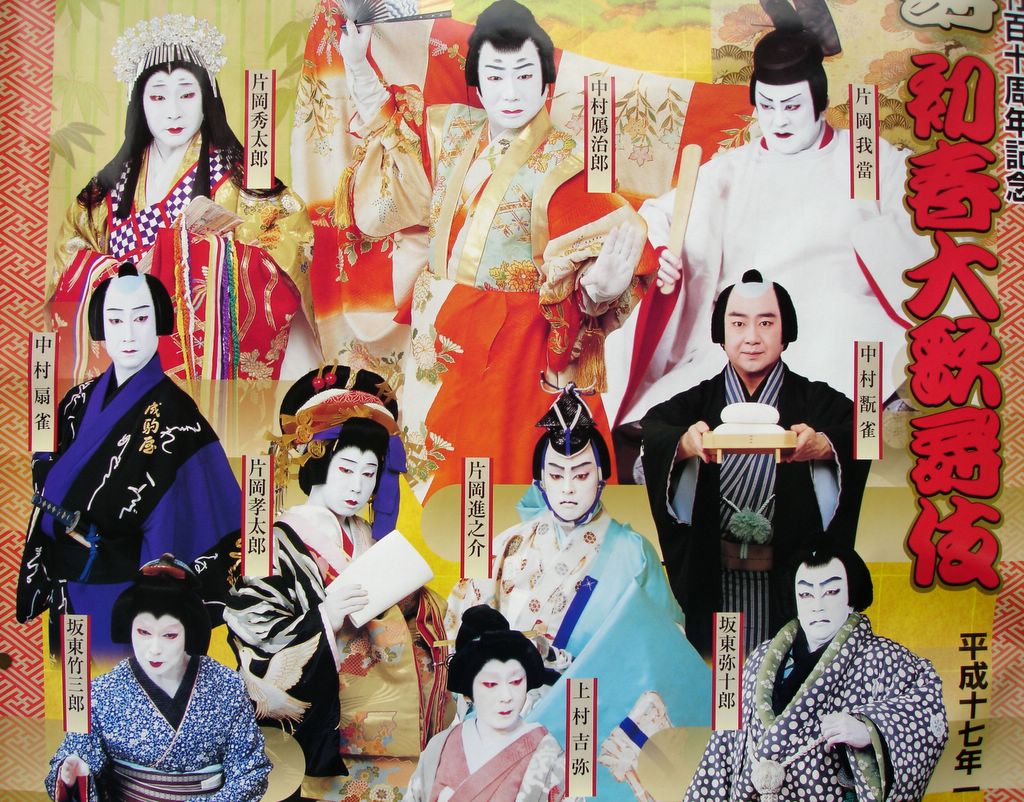
Kabuki, a traditional form of Japanese theatre, in which all roles are acted by men. Posted by Hello

I wandered up the subways stairs, past the famous Minamiza Kabuki theatre and towards Gion. Since it was lunch time and Indian food is a rare commodity in these here parts, I indulged in a little curry and dal in the same place where I had celebrated thanksgiving. It always makes me smile to hear the owner speak Japanese with his undeniably Indian intonation.


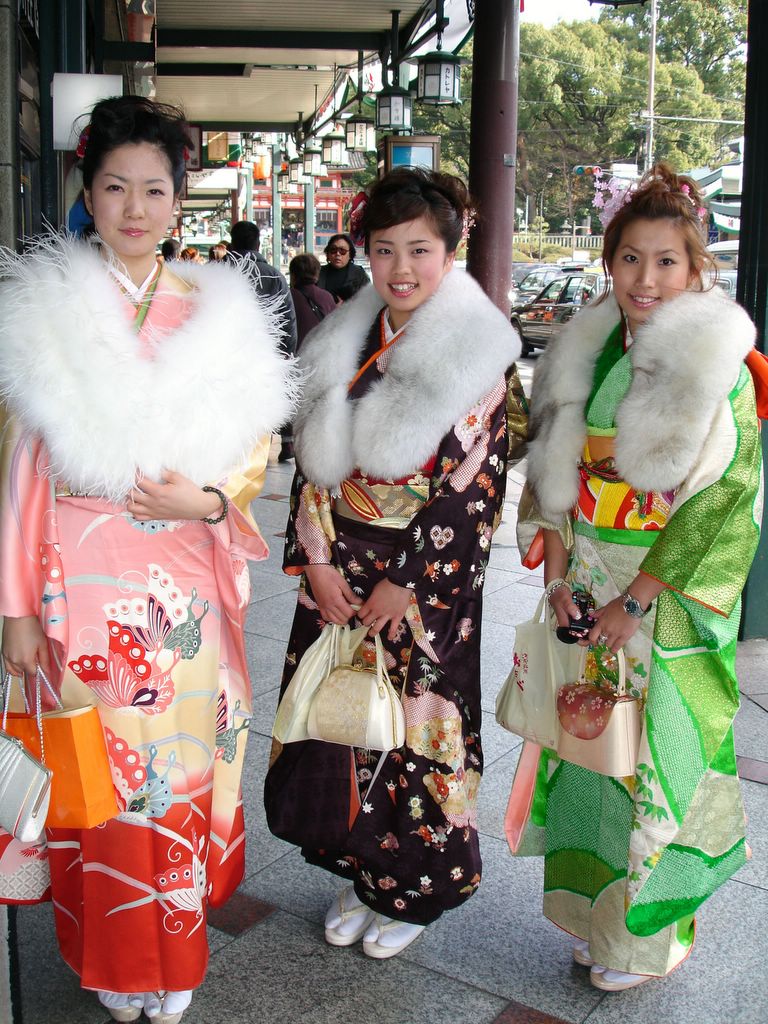
Brand-spankin' new adults I met on thier way from a New Year's visit to Yasaka shrine. Posted by Hello

After meeting my quota of curry in a hurry, I rolled myself out onto the street and turned, as if magnetically drawn, towards Yasaka Jinja. I squinted as what appeared to be three kyoningyo (Kyoto porcelian dolls) dressed in their finest furisode kimono slowly came into view. Seijinshiki and New Years celebrations were still in full swing! I stopped to congratulate them on their coming of age (and take their picture of course), and ran up to the shrine.


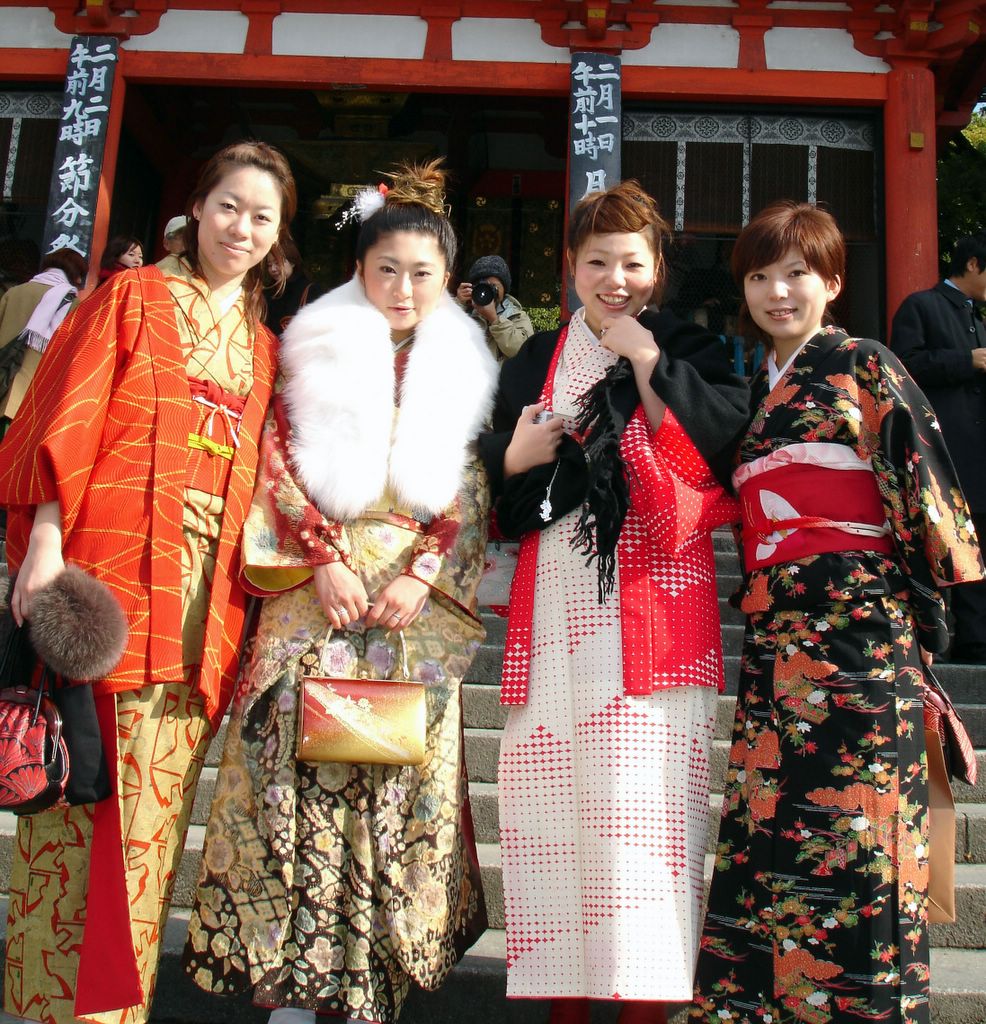
Leaving Yaska shrine, thesr girls couldn't escape without letting me take a picture. But who is that man in the back taking a picture of? Posted by Hello

From there it is only natural for me to head up the twisting, cobblestone roads that lead to Kiyomizudera. I know the path by heart, as if I had grown up wandering the narrow, twisting streets in another life. Along the way I ran into many nisemono maiko, tourists dressed as geisha apprentices to be photographed in the ancient capital, but nothing prepared me for the luck I would find at Kiyomizu.